For companies
Contribute to society
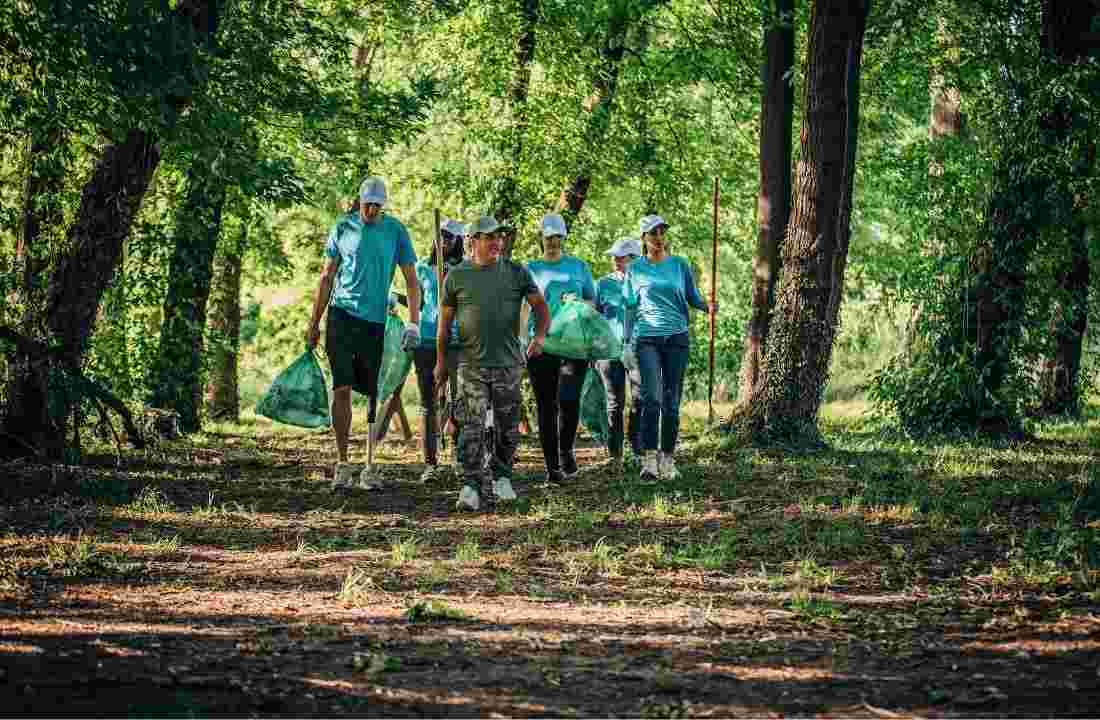
More and more companies feel that it is a great thing to contribute to society; a wonderful development! Moreover, employees increasingly indicate that they want to be able make a difference in the world during their work hours.
Get in touch with us to find a charity that fits your company. In that way, we can find great initiatives in the neighbourhood to do good with your colleagues.
Why join?
- Show that you are a committed employer,
- Potential and existing employees are finding impact increasingly important,
- Make sense of your CSR/SDG policy,
- Gain access to a wider network,
- Gain positive media coverage,
- Enhance corporate image,
- Team building promotes cooperation,
- Helping makes you happy,
- Getting involved is very simple because we help you with our expertise!
This is how you can help
Volunteering
Support organisations on a flexible, one-time or structural basis
Share knowledge
Share your knowledge with organisations
Donation of goods
Such as office supplies
Volunteering as a CSR, MVO, SDG or social return measure for your company
Volunteering is a great way to increase employee engagement and to contribute to society as a company. It is fun, too! We can help you to find activities that fit your company and employees wishes. Whether you want to work together with an existing organisation or set up your own project.
Success stories
"I am pleased to be able to make a difference and help someone who is alone and look forward to the visits."
Margaret was referred to Reach Out by a GP Link Worker. Reach Out support those facing loneliness or are vulnerable, whom have recently left hospital or who are risk of hospital admission. They do this by connecting clients with a befriender, for companionship, getting out and about and some regular connection.
At the time, Margaret was living with mild cognitive impairment and receiving support from the frailty team.
Like many people in similar situations, Margaret was spending a lot of time on her own so it was felt that having a befriender could offer her companionship, reassurance and perhaps even give her the confidence to get out and about again.
Enter, Sharon.
Sharon is a volunteer at Reach Out and upon asking if she would be happy to be matched with Margaret, she didn’t hesitate. Even after learning about Margaret’s mild cognitive impairment and that things might take time, Sharon was keen to help, if anything, it made her even more determined to help.
Their first contact was a phone call… which lasted 45 minutes! They had plenty to talk about and an immediate connection. When they first met in person, they got on really well, but Margaret understandably struggled at first to remember who Sharon was and when she would be visiting.
Sharon came up with a simple but brilliant plan. She photocopied her Reach Out ID badge and left a copy by Margaret’s diary, so Margaret could check each day who was coming and when. It worked a treat.
Before long, Margaret was ready and waiting when Sharon knocked on the door, knowing exactly who to expect. Soon, their visits began to include trips out together - something Margaret now looks forward to enormously.
These days, they love nothing more than heading out for a Coke, some peanuts and a good old chin wag.
Being able to get out of the house has made a real difference to Margaret’s mental health and feelings of loneliness.
As Sharon explains:
"Margaret spends a lot of time in her flat on her own and really looks forward to my visits so she can have a change of scenery and to do something different. Most times I take a picture and send it to her so she'll have something to reminder her of where we've been and what we've done."
Margaret worries about her memory and Sharon’s weekly visits have become a reassuring constant in her life.
Sharon has also been mindful of how Margaret experiences her memory loss. Margaret can remember the distant past but struggles with more recent events and has shared that some people can be abrupt when she repeats herself, which causes her anxiety.
" I tell her it does not matter ,” Sharon says, “e veryone forgets things and it’s okay to be told things more than once. We keep things light and relaxed, have a giggle and always have fun during my visits .
Sharon encourages Margaret’s independence and always speaks positively to her, helping to build confidence rather than anxiety.
And the impact goes both ways.
" I am pleased to be able to make a difference and help someone who is alone ," Sharon says. " I look forward to the visits. It’s helped me gain insight and understanding of dementia so I can support people better and not cause distress ."
She adds that the visits help her too, " I struggle to relax, so it’s good to sit and chat and eat cake. When I leave, Margaret shouts ‘Love Ya’ - and my heart hurts ."
Volunteers like Sharon, who give their time, compassion and creativity to support vulnerable people in our community, make such a meaningful difference in someone’s life.
Stories like Sharon and Margaret’s remind us why befriending is so important, particularly during seasons when people may feel more isolated. If you’d like to read more about the impact of befriending and why it matters now more than ever, you can explore our other blogs on befriending and community connection.
Or explore some of our befriending opportunities here - Could you be a befriender? | GoVolHerts
See moreNew Year, New Start: Reflecting, Reconnecting and Giving Back
As we come into a new year, many of us naturally become reflective.
The festive season often highlights how much we value connection. Time spent with family, friends, neighbours and elderly loved ones can remind us how important our own community really is. When that season ends and routines return... working from home, studying independently, quieter evenings... the contrast can feel surprisingly stark.
While New Year’s resolutions often focus on personal goals like fitness or productivity, one of the most meaningful intentions we can set is to reconnect: with others, with our community and with a sense of purpose.
Reviewing What Matters Most
Taking a moment to reflect on the past year can be hugely beneficial on how to move forward for the year ahead.
Thinking about what gave you energy, joy, memories, excitement, worry, dread... For many, the answer isn’t found in ticking off achievements, but in experiences we share with others.
Volunteering can be a natural extension of those reflections. It offers a way to carry forward what you value into the new year, whether that’s connection, contribution, learning or simply doing something that feels worthwhile.
Volunteering as a Fresh Start
Volunteering doesn’t have to mean a huge commitment or a complete lifestyle change (although it can if you want to!).
It can be as simple as giving a little time regularly in a way that fits around your life. What matters is the intention behind it.
Getting involved in your community can help you to:
Feel more connected and less isolated
Meet people you might not otherwise cross paths with
Learn new skills or rediscover old ones
Build confidence and a sense of belonging
Create structure and meaning in quieter routines
Make friends
Explore where you live and find out what is going on
There are many different ways to volunteer, from practical support like admin and computer based roles, to creative projects such as decorating youth clubs or garden work to social roles.
Social roles tend to focus more on the companionship than an 'outcome', such as befriending which offers just that to those who could otherwise be or feel quite isolated from the rest of the community.
Small Steps, Big Impact
Befriending is just one example of how volunteering can bring people together through simple connection. Whether it’s chatting face-to-face, over the phone or online, companionship-based volunteering reminds us that presence alone can be enough to make someone's day.
As you step into the new year, consider what you want to carry forward and what you might like to add. Giving back, even in small ways, can be a grounding and hopeful way to begin a new chapter.
Check out our latest roles - Volunteer in your community | GoVolHerts
See moreApplying to be a volunteer
GoVolHerts makes it very easy to find great volunteer roles and contact charities and community groups to let them know you’re interested.
What happens next?
It depends on the organisation and the role. Sometimes you can get started almost straight away but it's rarely quite as quick as the clipboard in the image suggests! Necessary checks and processes during recruitment may mean the process takes a little while. You'll probably need to provide some information about yourself and your suitability for the role. The organisation will most likely want to know why you are interested in this role and what you hope to get from volunteering. You will probably have some questions for them too. You might need to complete an application form and have a chat or a meeting with the volunteer manager.
If your application is successful you may be asked to sign an agreement about your volunteering and you might be requested to do some training before you get started volunteering.
References
As part of your application you may be asked for references. These might not need to be formal (work/education) references, personal references might be fine; do check with the organisation if you aren't sure about what references you can give.
Identity
You might also be asked to provide ID documents. If an organisation requests a DBS check for you they will need to check your ID.
Criminal records and DBS (Disclosure & Barring Service) Checks
For some volunteer roles, when you have applied to be a volunteer and you seem a suitable fit, you will be asked to disclose convictions and have a DBS check. Often this won’t be necessary; it depends on the role.
This is part of the organisation’s safeguarding responsibilities and responsible recruitment. In deciding whether such checks are needed, and at what level, the organisation will consider the responsibilities of the role, who volunteers will be interacting with and the activities involved, as well as associated risks. For some roles, it is a legal requirement for checks to be carried out and some people are barred from working/volunteering in roles with vulnerable adults and children. Organisations can consult formal guidance to know whether a check is legally required for a volunteer role and about the appropriateness of different levels of checks.
Basic checks
Not required by law, but for some roles organisations may have decided these are necessary. They are requested by the person themselves.
There is a fee for a basic check. If the organisation asks for you to request this check and share the results with them, it is good practice for them to reimburse you the costs incurred.
Standard, Enhanced and Enhanced with Barred checks
These are only appropriate in particular circumstances and must be requested by the organisation.
Checks will provide information that is accurate at the time of issue and if there are any matters of potential concern which show up in the check, the organisation will discuss this with you.
In roles which require these more advanced checks, the organisation’s policy will likely require a check to be repeated after a period of time.
DBS Update Service
With Standard and Enhanced checks there is a useful way to check for any new issues, saving time and effort and avoiding having to repeat the check process from scratch, through the volunteer applying to the Update service. This can only be organised during the process of applying for your DBS check or within a short period of receiving your certificate.
DBS Update Service - GOV.UK
Guidance about the Update Service
Whilst there is a charge for this service, it is free for volunteers.
If you have a conviction
Each individual should be looked at on their own merit. Some past convictions will not be considered relevant for a role. In some roles your lived experience may be a strength.
You may find this information useful: Volunteering - Unlock .
Volunteering in the right role can be a great way to make contacts and friends, feel you're contributing, boost your self-esteem and confidence, get into a routine, enhance your skills, get experience and references. For many, it's a useful and rewarding step on the way towards paid work.
See more